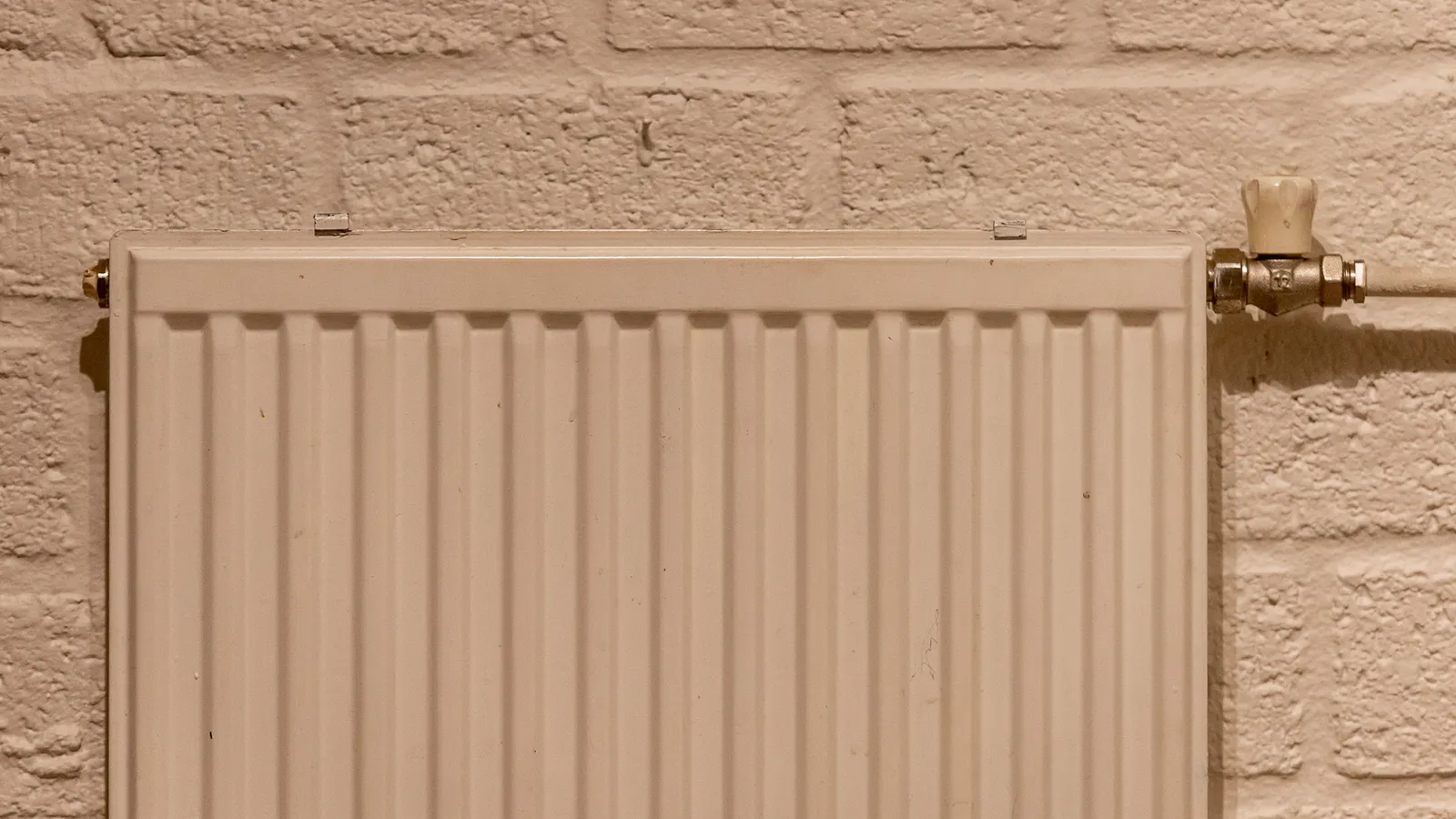
A large share of North Jersey heat still comes from a boiler in the basement feeding cast-iron radiators or baseboard, and a lot of those systems are older than the people living with them. The good news is that boilers are simple and they last. The bad news is that when they stop, it's almost always on the coldest night of the year — and it's usually for something that was already showing itself weeks earlier.
Here's the thing worth internalising: most no-heat calls are not the boiler. They're a control, a pump, a valve, or air in the system. The boiler itself — the vessel that holds the water and takes the fire — tends to outlive several rounds of everything bolted to it. That's why a good diagnosis starts at the thermostat and works inward rather than starting with a quote for a new boiler.
Start with pressure, because it's the one thing you can read yourself. A residential hot-water system usually sits around 12 to 15 psi cold, rising some when hot. Well below that and the upper floors won't get water at all. Well above it and you'll be pushing water out of the relief valve. A gauge that has drifted low over a few weeks means you're losing water somewhere, and a system that keeps needing to be refilled is a system quietly filling itself with fresh oxygenated water — which is what rots the insides of everything downstream.
Air is the other classic. If a radiator is hot at the bottom and cold at the top, it's holding air, and bleeding it takes a key and about a minute. If a whole zone is cold while the pipe leaving the boiler is hot, suspect the circulator for that zone or its zone valve rather than the boiler. Circulators fail quietly — often they'll hum without actually moving water — and a zone valve that has lost its motor will simply never open.
On steam systems, which are common in the older towns like Rutherford, Glen Ridge and parts of Montclair, the failures are different. The low-water cutoff is the safety that stops the boiler firing when the water level drops, and it's also the single most common reason a steam boiler won't run. It needs flushing on a schedule. Radiator vents are the other one: when they fail closed, the air can't get out and steam can't get in, so that radiator stays stone cold no matter what the thermostat does.
Banging pipes on a steam system — that hammer that sounds like someone hitting the radiator — is almost always condensate sitting where it shouldn't, usually because a radiator has lost its pitch back toward the return. Shimming a radiator so it drains properly is a five-minute job that fixes a noise people put up with for years.
The thing worth doing in October, before you need it: run the system. Turn the heat up ten degrees on the first cool day and let it cycle for an hour. Walk the house and touch every radiator. Look at the pressure. Listen to the circulator. Everything that's going to fail in January will usually declare itself right there, in a week when getting a part is easy and a service call isn't an emergency.
And if the boiler is genuinely at the end — a cracked section, a leaking vessel, a heat exchanger that's gone — that's a replacement conversation, and we'll have it honestly. But we'd rather find out it's a fifty-dollar zone valve, and most of the time, it is.
Heat not right this year? Call Andes HVAC at (973) 855-9039. We service gas and oil boilers on both steam and hot-water systems across Essex, Bergen, Union and Passaic counties.