In towns like Montclair, Ridgewood, Glen Ridge and Westfield, we walk into the same conversation every summer. Beautiful old house, heat that works, and one part of it — a third floor, a finished attic, an addition over the garage — that's unusable from June to September. The ducts don't go there, and running new ones through a finished house means opening walls and ceilings that nobody wants opened.
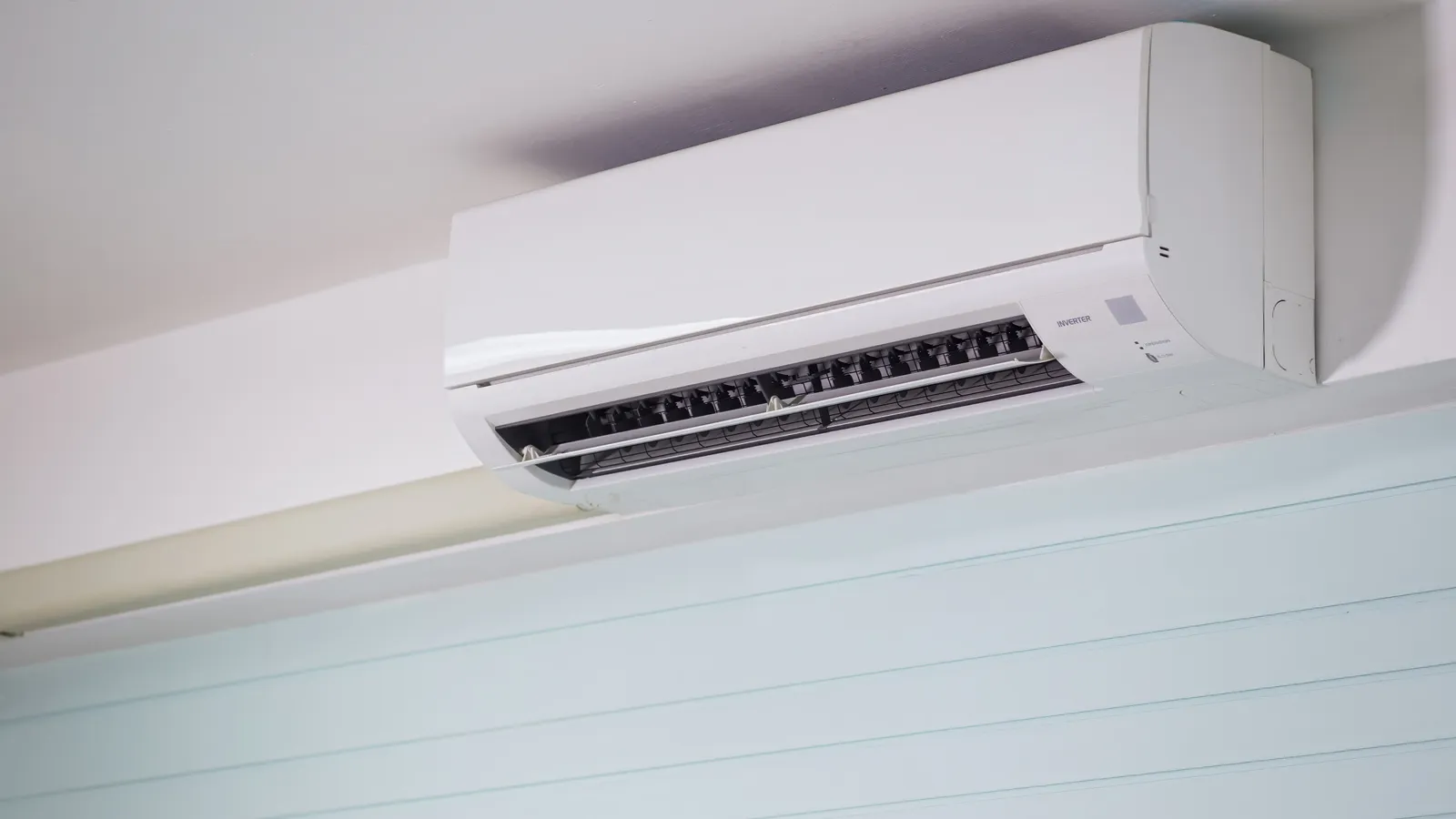
That's the problem ductless was built for. A mini-split has an indoor head mounted on the wall inside the room and an outdoor unit somewhere sensible outside, connected by a line set — a pair of insulated copper refrigerant lines, a drain, and a control cable — that only needs a three-inch hole through the wall. No duct chases, no soffits, no lost ceiling height.
The practical advantages beyond that are worth knowing. Each head is its own zone with its own control, so you're not cooling the whole house to fix one room. They're inverter-driven, which means they modulate rather than cycling hard on and off — quieter, steadier temperature, and much better at pulling humidity out of a room than an oversized central system. And most models are heat pumps, so the same unit heats the room in winter, which is often the more valuable half in a room the boiler barely reaches.
The honest limitations. A head conditions the space it can see: it will do an open floor or a room beautifully and it will not push air around a corner into a closed bedroom. A floor with three closed bedrooms needs three heads or a different approach. They're visible — a white unit high on the wall — and while ceiling cassettes and floor-mounted units exist for where that matters, most people are getting the wall head. And the outdoor unit has to go somewhere with clearance and support, which in a tight side yard is a real constraint we sort out on site before quoting.
On sizing, be sceptical of anyone who goes big. An oversized head is worse than a correctly sized one: it satisfies the thermostat fast, shuts down, and never runs long enough to dehumidify, so the room ends up cold and clammy. Sizing to the room — its volume, its windows, its exposure, what's above it — is the part that determines whether you're happy with the system in August.
Single-zone or multi-zone is mostly a question of how many rooms and where they are. One outdoor unit can carry several heads, which keeps the outside tidy and is usually cheaper than several separate systems. The trade-off is that they share a condenser, so a fault outside takes every zone with it. For two or three rooms, multi-zone is normally the right call.
A few things that separate an install that lasts from one that doesn't, all of which happen where you can't see them. The system has to be pulled down to a deep vacuum before it's charged, to get moisture and non-condensables out of the lines — skipping that is the single most common cause of a mini-split that dies young. Flare connections need to be made properly and torqued, not just tightened. The line set needs to be insulated its whole length. And the condensate drain needs real fall, or a pump if it can't get it, because a blocked drain on a wall head shows up as water running down your plaster.
Where a mini-split isn't the answer: if you have good, intact ductwork reaching the room and it simply isn't performing, the problem is usually airflow — a crushed flex run, a starved return, leaking duct in a hot attic — and fixing that is cheaper than adding equipment. We'd rather check that first and tell you that you don't need us to install anything.
Thinking about ductless? Call Andes HVAC at (973) 855-9039. We'll walk the rooms with you, tell you honestly what a head can and can't do in each one, and where the line set can actually run in your house.